
Wearables Track Women’s Cycles.
But They Still Don’t Really Support Them.
We are not in the 1950s anymore.
Women are building companies.
Raising children.
Training for marathons.
Leading teams.
Closing investment rounds.
And yet much of wearable tech is still built around one quiet assumption:
That performance should look the same every day.
One body.
One baseline.
One rhythm.
That rhythm just happens to be male.
And Before Anyone Comes for Me…
I love my Oura ring.
Truly.
The first time it detected my ovulation accurately, I was actually elated.
I remember thinking,
“Finally. Technology sees me.”
Watching temperature shifts.
Seeing patterns in HRV.
Tracking what day of my cycle I’m on without having to count backwards in my head.
It felt progressive. Intelligent. Validating.
And that matters.
We are no longer invisible inside our own health data.
But…
After the data appears on the screen…
Then what?
Tracking Is Not the Same as Supporting
I can see my stress is elevated in luteal.
The app might suggest I rest.
But luteal me doesn’t just need “rest”.
She needs:
• More calories
• Less high strain training
• Slower mornings
• Emotional processing
• Fewer social commitments
• Nervous system down regulation
Ovulation me? Completely different woman.
Follicular me? Optimistic, focused, ready to build.
Menstrual me? Needs depth, quiet, and reduced output.
Four phases.
Four physiological environments.
Four different nervous system needs.
Yet most advice remains beautifully… neutral.
“Take a short meditation.”
“Reduce strain.”
“Prioritise recovery.”
It’s not wrong.
It’s just not phase aware.
And in 2026, we can do better than neutral.
Data Without Direction Creates Friction
We are living in the age of optimisation.
Women are tracking everything.
But data without contextual guidance does not create empowerment.
It creates mental load.
If my wearable can detect ovulation with impressive precision…
Surely it can adapt recovery guidance based on whether I’m in luteal versus follicular?
Surely strain recommendations can adjust dynamically?
Surely sleep support can reflect hormonal shifts?
We are not asking for magic.
We are asking for integration.
This Is Not a Niche Feature
Women are not a subcategory.
We are half the market.
And we are increasingly hormone literate.
We understand that progesterone drops in late luteal.
That stress sensitivity increases.
That caloric needs rise.
That sleep changes.
We are tired of bending ourselves to linear systems.
The first wearable brand to fully integrate:
Cycle phase intelligence
Adaptive strain guidance
Hormone informed recovery
Nervous system regulation protocols
will not just add a feature.
It will redefine the category.
Proof That Women Want This
Inside The Self Care Space, the online nervous system membership I founded five years ago, every practice is categorised by cycle phase.
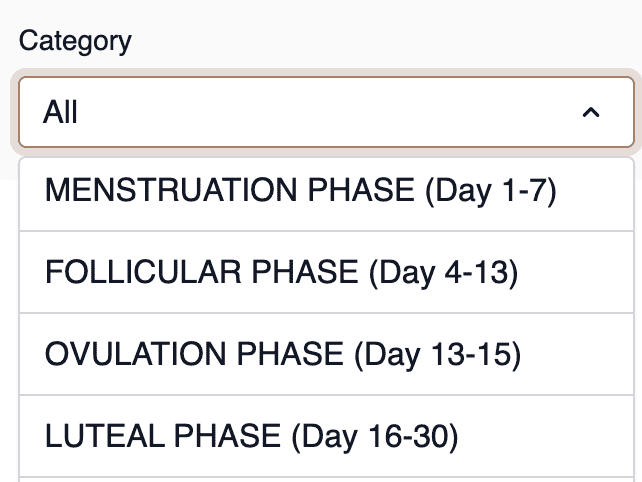
Women don’t receive the same guidance in luteal as they do in ovulation.
In luteal, we prioritise:
Gentle somatic work
Emotional processing
Increased nourishment
Reduced output
The feedback is consistent:
Relief.
Less self judgement.
More sustainable energy.
When women are supported in alignment with their physiology, performance does not collapse.
It stabilises.
And that is far more interesting.
Leadership Means Moving First
We are no longer in an era of “close enough”.
The next evolution of wearable technology will not be defined by more metrics.
It will be defined by deeper intelligence.
The brand that moves from:
Tracking → Supporting
Predicting → Adapting
Measuring → Integrating
will win something far more valuable than downloads.
Trust.
Because we are not in the 1950s.
Women are not small men.
And health technology has an opportunity to lead accordingly.
The data is already there.
Now it is time to build the intelligence around it.
Phoebe Greenacre is a qualified somatic therapist and nervous system educator with over a decade of experience supporting women through emotional regulation, sleep challenges and identity shifts.
Her work sits at the intersection of physiology, performance and cyclical living, helping women work with their body rather than against it.
She is the founder of The Self Care Space, an online platform and app offering phase aware somatic practices, breathwork and restorative movement for modern women.
Phoebe is a registered professional member of the International Somatic Movement Education and Therapy Association (ISMETA). Originally from Sydney and now based in Bali, she works with clients globally.


